If you've spent much time outside in Northern Virginia lately, there's a good chance you've seen a spotted lanternfly.
These distinctive invasive insects have become increasingly common across Virginia since they were first detected in the state in 2018. And while spotted lanternflies feed on a wide variety of plants, there's one tree homeowners should pay particular attention to: Tree-of-Heaven.
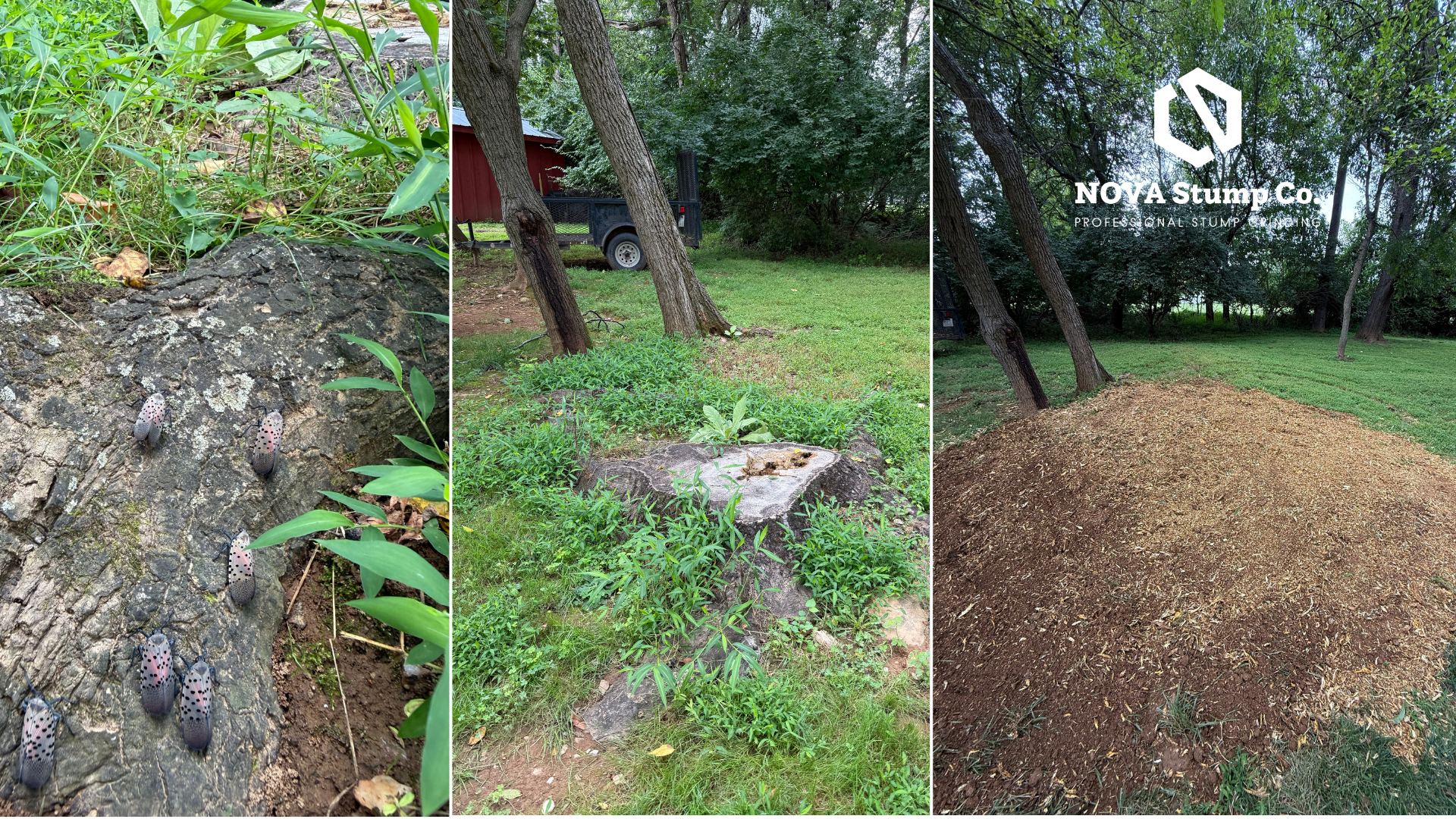
At NOVA Stump Co., we've encountered this connection firsthand. During a recent stump grinding job in Northern Virginia, we found a Tree-of-Heaven stump covered in spotted lanternflies.
So, what's the connection? And what should you do if you have Tree-of-Heaven growing on your property?
What Is a Spotted Lanternfly?
The spotted lanternfly (Lycorma delicatula) is an invasive insect originally from Asia.
Adults are about an inch long, with grayish wings covered in black spots. When they spread their wings, they reveal distinctive red, black, and white markings.
Spotted lanternflies feed by piercing plants and consuming sap. They can feed on many different plants found in Virginia, including maples, walnuts, oaks, fruit trees and grapevines.
For homeowners, they're often as much of a nuisance as they are a plant-health concern. Large populations can produce significant amounts of a sugary substance called honeydew, which can coat surfaces below the insects and encourage the growth of sooty mold.
One plant, however, has an especially strong connection to spotted lanternflies.
Why Spotted Lanternflies Love Tree-of-Heaven
Tree-of-Heaven (Ailanthus altissima) is an invasive tree found throughout Virginia and much of the Mid-Atlantic.
Despite its pleasant-sounding name, Tree-of-Heaven can be extremely aggressive.
It grows quickly, tolerates poor soil and disturbed areas, produces large numbers of seeds, and can spread through its root system.
It's also a preferred host of the spotted lanternfly.
Spotted lanternflies can feed on many plants, but Tree-of-Heaven is strongly associated with the insect. Homeowners may see adults congregating on the trunk, branches or new growth.
That means if you're seeing unusually large numbers of spotted lanternflies in your yard, it's worth taking a look at the trees growing around your property.
You may have a Tree-of-Heaven nearby without realizing it.
How to Identify Tree-of-Heaven
Tree-of-Heaven can be tricky to identify because it resembles several native trees, particularly black walnut and sumac.
A mature Tree-of-Heaven can grow very quickly and eventually reach a substantial size. Its leaves are large and compound, consisting of numerous smaller leaflets arranged along a central stem.
One identifying characteristic is the leaflet itself. Tree-of-Heaven leaflets generally have smooth edges with small glandular teeth near their base, while similar-looking trees such as walnut and sumac have more obviously serrated edges.
Tree-of-Heaven is also known for producing a distinctive unpleasant odor when its leaves or twigs are crushed.
If you're unsure what you're looking at, don't remove a tree solely because you suspect it's Tree-of-Heaven. A certified arborist or your local Virginia Cooperative Extension office can help with identification.
Why You Shouldn't Simply Cut Down Tree-of-Heaven
Here's where things get interesting.
With many unwanted trees, the obvious solution is:
Cut it down.
Tree-of-Heaven doesn't always cooperate.
The species can respond aggressively to being cut or damaged by sending new shoots up from its stump and extensive root system. Instead of eliminating one tree, improper removal can potentially result in numerous new sprouts appearing around the property.
That's why Virginia Cooperative Extension recommends careful management of Tree-of-Heaven rather than simply cutting it down.
Professional treatment may be necessary to kill the root system before the tree is removed. Depending on the situation, this can involve properly timed herbicide treatments performed according to label directions.
For larger trees or extensive infestations, consulting a qualified tree-care or invasive-plant professional is a good idea.
Where Does Stump Grinding Fit In?
Once a Tree-of-Heaven has been properly treated and removed, the remaining stump can still be an unwanted obstacle in your yard.
That's where stump grinding comes in.
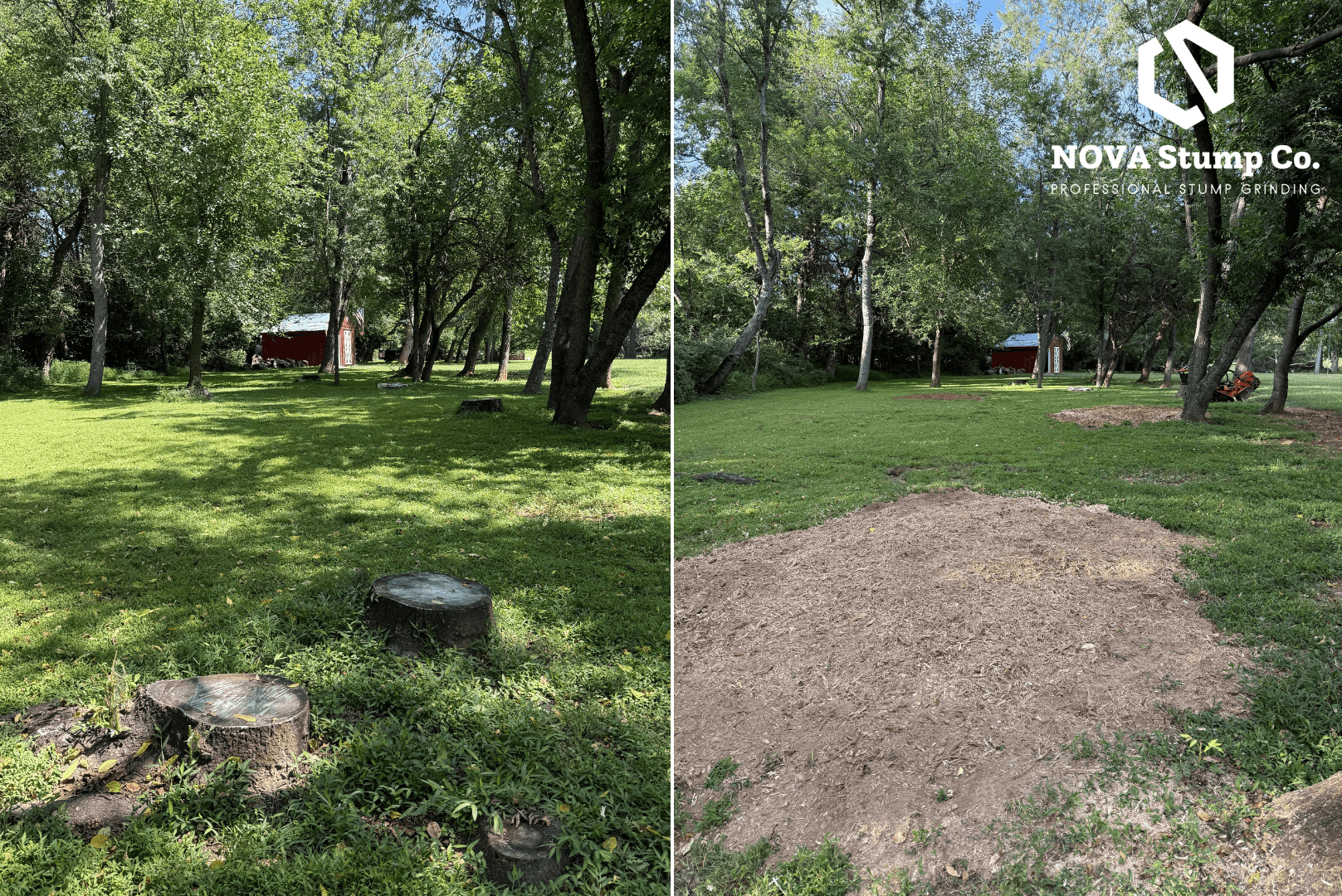
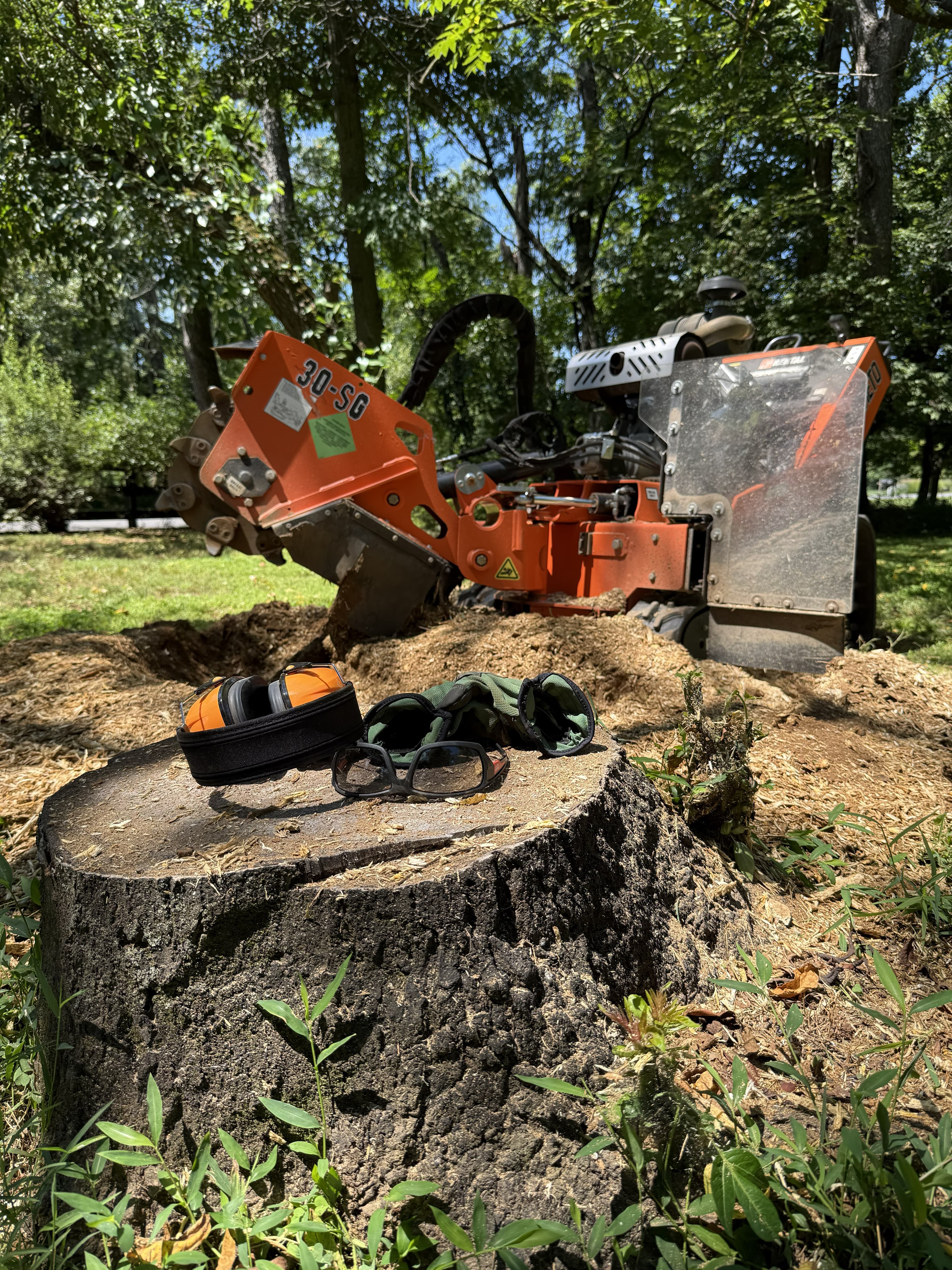
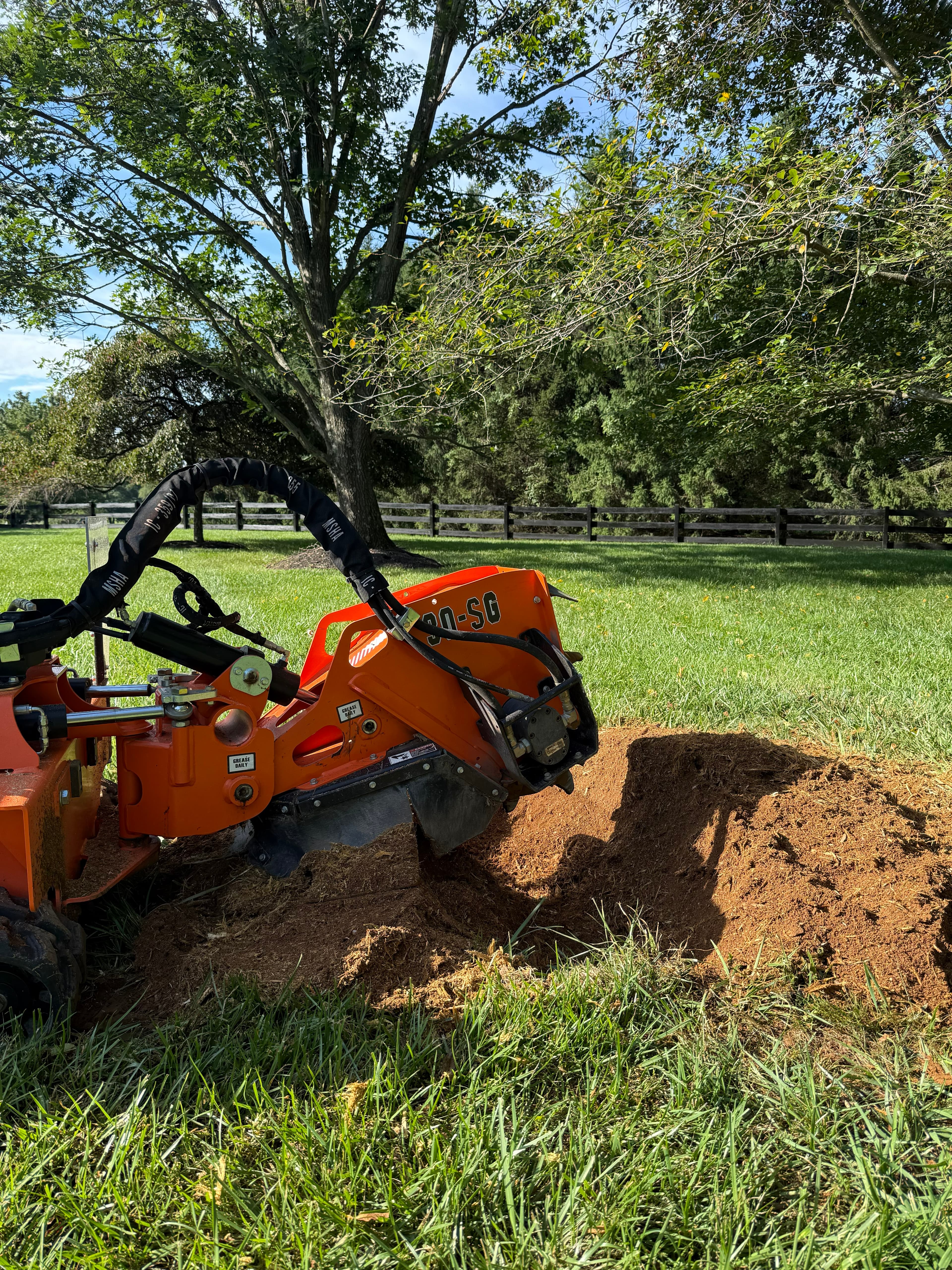
A stump grinder mechanically removes the remaining stump and major root flare below ground level. This allows homeowners to reclaim the area for grass, landscaping or other uses without excavating the entire root system.
However, there's an important distinction:
Stump grinding should not be considered a substitute for properly managing a living Tree-of-Heaven.
Grinding an untreated stump does not guarantee that the entire root system is dead, and Tree-of-Heaven roots may produce new shoots.
If the tree is still alive, the appropriate treatment and removal strategy should come first. Stump grinding can then be used to remove the remaining stump after the tree and root system have been properly managed.
Does Removing Tree-of-Heaven Get Rid of Spotted Lanternflies?
Not necessarily.
Spotted lanternflies are highly mobile and feed on many different species of plants. Removing one Tree-of-Heaven will not eliminate spotted lanternflies from your neighborhood or guarantee that you won't see them elsewhere on your property.
However, management of Tree-of-Heaven is one component of broader spotted lanternfly management because of the insect's strong preference for the species.
Homeowners can also monitor their property for spotted lanternfly adults, nymphs and egg masses.
Egg masses can appear on trees as well as outdoor objects such as rocks, patio furniture, vehicles, firewood and landscaping materials. Because egg masses can hitchhike on objects that are moved to new areas, checking outdoor items before transporting them can help limit their spread.
What Should You Do If You Find Tree-of-Heaven?
If you suspect you have Tree-of-Heaven on your Northern Virginia property:
1. Confirm the identification.
Don't remove a native walnut, sumac or other beneficial tree because it looks similar.
2. Don't immediately cut it down.
Cutting an untreated Tree-of-Heaven can trigger aggressive root and stump sprouting.
3. Determine the appropriate treatment.
For established trees, consult a qualified tree professional, invasive-plant specialist or Virginia Cooperative Extension for guidance.
4. Have the tree removed once it's appropriately managed.
Larger trees should generally be handled by a professional tree company.
5. Remove the remaining stump.
Once the Tree-of-Heaven has been appropriately treated and removed, stump grinding can eliminate the remaining stump and help return that portion of your yard to usable space.
6. Continue watching for new growth.
Because Tree-of-Heaven can spread through an extensive root system, continue monitoring the surrounding area for new sprouts.
Spotted Lanternflies in Northern Virginia Aren't Going Away Overnight
Spotted lanternflies have become part of the landscape across much of Virginia, and homeowners are likely to continue encountering them.
The good news is that understanding what attracts them — and recognizing invasive plants such as Tree-of-Heaven — can help homeowners make better decisions about managing their property.
And if you've already had a Tree-of-Heaven or another unwanted tree properly removed but still have the stump left behind, that's where we can help.
NOVA Stump Co. provides professional stump grinding throughout Northern Virginia, including Arlington, Alexandria, Fairfax, Falls Church, McLean, Vienna, Springfield, Burke and surrounding communities.
Whether you have one stump or several, we'll help you reclaim the space and leave your yard ready for what's next.
Contact CJ at NOVA Stump Co. at (703) 717 3094 for a free stump grinding estimate.